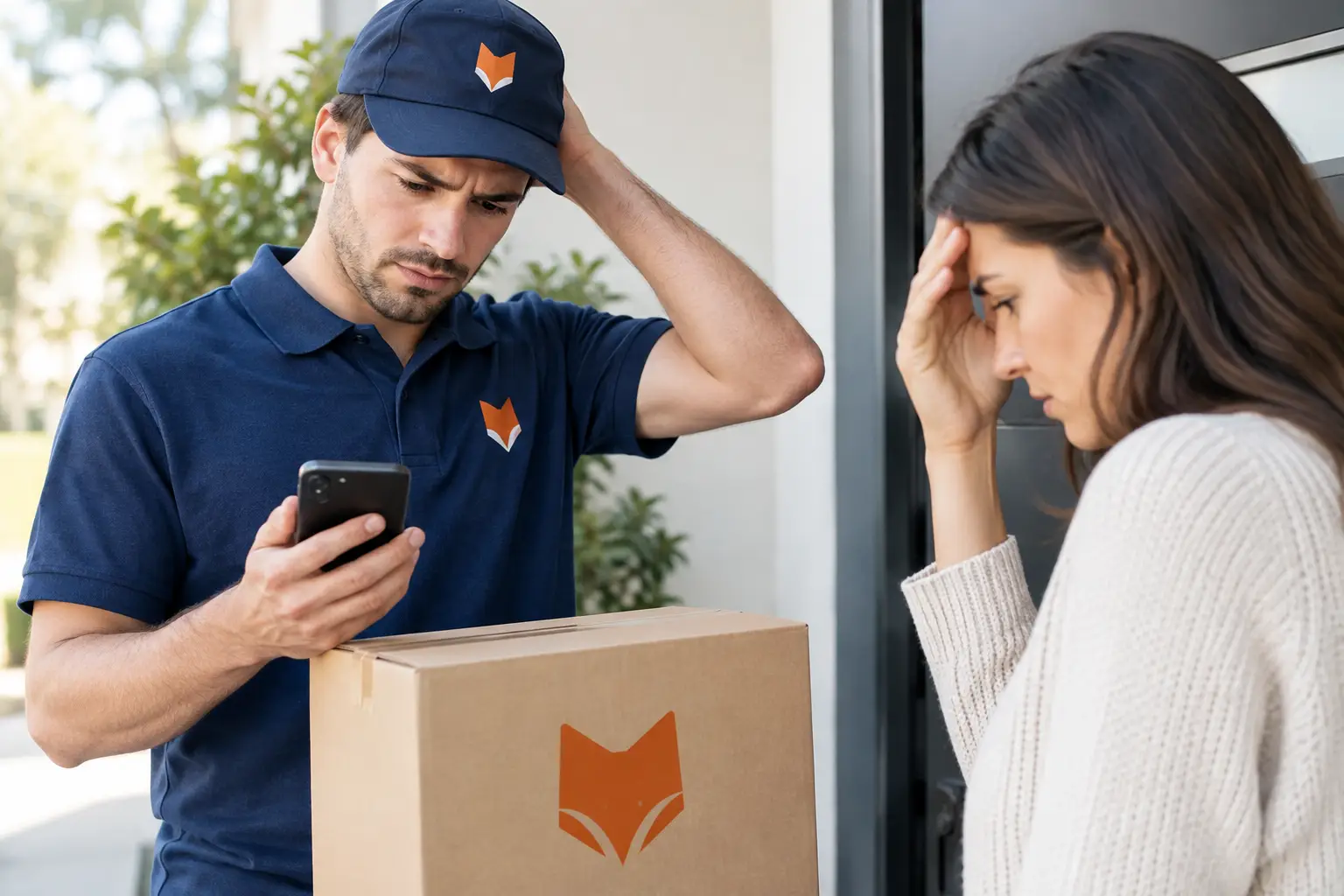
An order can leave the warehouse on time and still end up as a poor shopping experience. All it takes is an incomplete address, a mislabelled parcel or an unrealistic delivery promise to trigger a support ticket, a return or the loss of a customer. Understanding why ecommerce deliveries fail makes it possible to act on the process before an incident hits margin, reputation and repeat purchases.
The most common mistake is to blame every problem on the carrier. Transport is a critical part of the chain, but delivery starts long before that: in the quality of the data coming in from the store, in inventory accuracy, in picking, in packing and in the rule that decides which courier should handle each order. When one of those points fails, the last mile simply makes the problem visible.
Why ecommerce deliveries fail: the problem starts before dispatch
A failed delivery isn't always a lost parcel. It can also be an order that arrives late, at the wrong address, with the wrong product, damaged, or without clear tracking information. For the customer, the outcome is the same: uncertainty. For the brand, it means more customer service workload, reshipping costs and less confidence for the next purchase.
The root cause is usually a disconnected operation. Many stores grow using spreadsheets, manually updated stock and shipping decisions made order by order. That system can work with low, stable volumes. It stops working once SKUs, sales channels, promotions or international destinations increase.
The solution isn't adding more people to pack boxes. It's designing controls that catch errors before the order leaves and turning operational data into automatic decisions.


