Picking and packing: what they are and how to get them right in your store
Picking and packing explained for online stores: what each stage involves, picking types, how to pack, what to measure and when to stop doing it in-house.
Picking and packing are the two stages that turn an order from your online store into a parcel ready for the courier. First the product is collected from the shelf (picking), then it's packed, labelled and left ready to go out (packing). Almost every error that ends up as a one-star review starts in one of these two steps.
Picking is the collection of the exact items in each order, in the correct quantity, from their location in the warehouse. Packing is everything that comes after: checking what's been collected, choosing the box, protecting the product, sealing it, attaching the shipping label and leaving the parcel in the dispatch area. One aims to get it right; the other, to make sure it arrives safely.
What does picking packing mean (and what is pick, pack and ship)
The terms come from English: to pick is to select or collect, and to pack is to package. In job adverts and contracts with logistics operators they're used together because, in practice, they form a single workflow within the warehouse.
When you read pick, pack and ship, a third leg is added: shipping. That is, collecting, packing and handing the parcel over to the right courier. In a small online store, the same person does it all at the same table; in a high-volume warehouse, these are separate roles with checks between each one.
What is picking in a warehouse
Picking starts when the order enters the system and ends when all its items have been gathered and are ready to pack. It sounds simple, but it's the stage that takes the most time: a good chunk of a picker's day goes on walking between aisles.
The steps of good picking
Generate the picking list: which SKUs, how many units and where they're located.
Walk the warehouse in a logical order, not in the order items appear on the order.
Find the location and check the SKU (better with a barcode scanner than by eye).
Take the exact quantity and, if there are batches or expiry dates, the correct unit (the one that expires soonest).
Leave the completed order in the labelled tote or trolley and take it to the packing area.
Picking errors you see every day
Mixing up variants: the T-shirt in size M instead of L, the 30ml serum instead of the 50ml one.
Wrong quantities: the order was for three units and only two go out.
Stock the system shows as available that isn't actually there, because someone left it on another shelf.
Mixing items from two different orders in the same tote.
Almost all of them share the same root cause: unclear locations and visual checks instead of scanning. We go into more detail in our guide on order preparation errors and how to avoid them.
What is packing
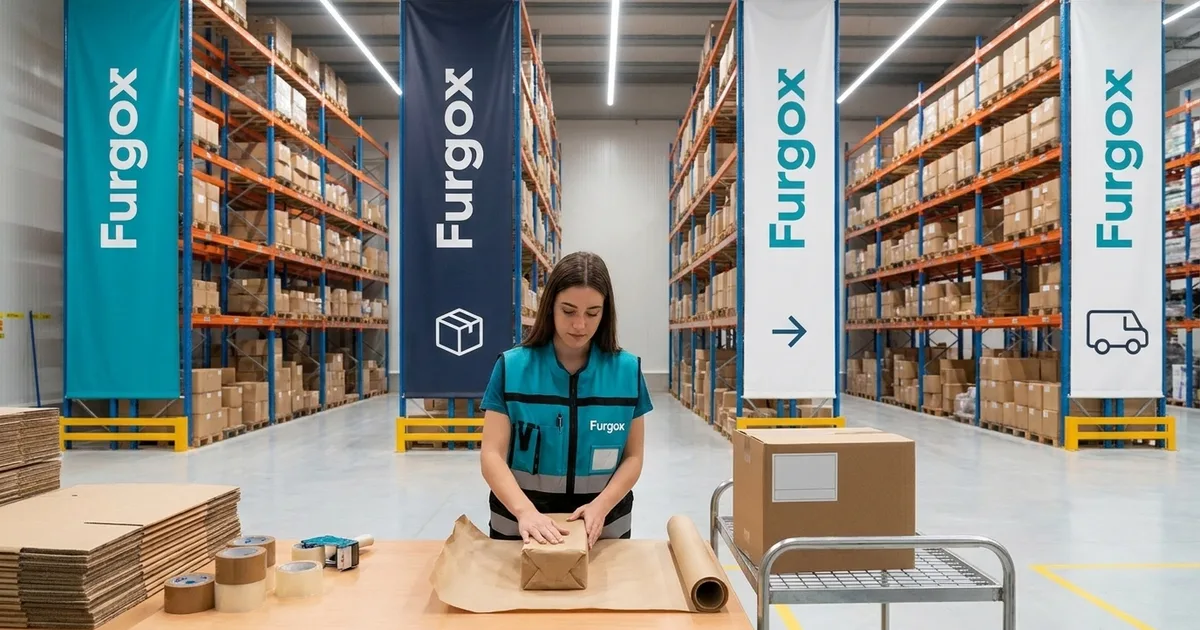
Packing is the packaging and labelling stage. It has a triple goal: making sure the product arrives intact, keeping the shipping cost as low as possible, and making the unboxing experience live up to your brand.
What packing includes
Verifying the order: what's in the tote matches what the customer ordered.
Choosing packaging suited to the size and fragility.
Protecting the product and filling gaps so nothing moves.
Sealing, weighing and generating the courier label.
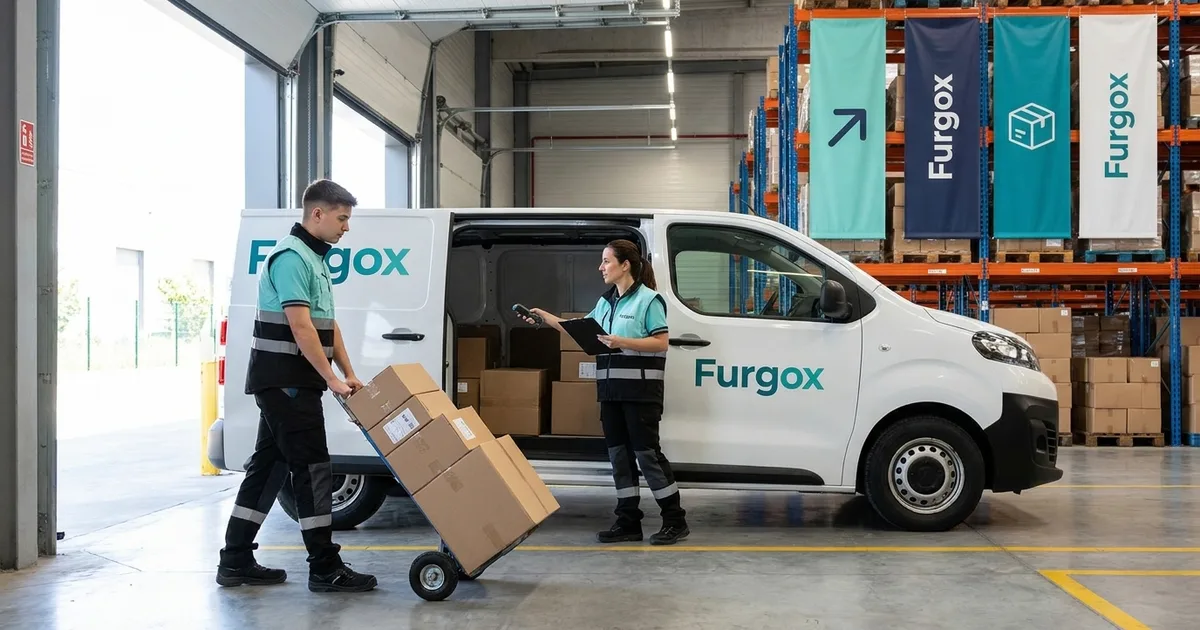
Leaving the parcel in the dispatch area, sorted by courier.
Differences between picking and packing
Goal: picking aims for accuracy (the right item and quantity); packing aims for protection and presentation.
Where it happens: picking in the aisles and on the shelves; packing at the packing bench.
What slows it down: in picking, travel time; in packing, hunting for materials and hesitating over which box to use.
What goes wrong: in picking, wrong or incomplete products; in packing, breakages, oversized boxes and mixed-up labels.
How it's controlled: picking with location and product scanning; packing with a final check and weighing.
They're different stages, but an error in the first one is only caught in the second if someone checks. That's why packing also works as quality control for picking.
Types of picking: which one suits your orders
Picking by order
The picker takes one order and walks the warehouse until it's complete. It's the most intuitive system and the one almost every store uses when starting out. It works well with few orders a day or with large orders containing many lines, but it becomes inefficient when there are lots of small orders: you walk down the same aisle ten times.
Batch picking
Several orders are grouped together and picked all at once, usually with a trolley holding several totes, one per order. If ten orders include the same product, you only visit that location once. It cuts travel time significantly, but needs a solid system to avoid mixing up orders: each tote labelled and scanned when items are placed in it.
Wave picking
Orders are released in scheduled batches throughout the day, grouped by a chosen criterion: courier, collection time, priority or warehouse zone. For example, one wave first thing in the morning for urgent shipments and another before the afternoon collection. This is what allows you to meet cut-off times without everything piling up at the end.
Other systems you'll come across
Zone picking: each picker is responsible for one area of the warehouse and the order moves from one to the next.
Person-to-goods: the operator goes to the shelf. This is the norm in online stores.
Goods-to-person: the shelf or box comes to the operator via automated systems. This requires investment that only makes sense at very high volumes.
In practice, these are combined: batches within waves, for example. The useful rule is simple: if most of your orders are for one or two units and SKUs repeat often, batch picking will save you time from day one.
Packing: materials and packaging criteria
Basic materials
Cardboard boxes in three or four standard sizes that cover most orders.
Padded envelopes or mailing bags for textiles and products that don't break.
Filler: kraft paper, die-cut cardboard or air cushions.
Good quality adhesive tape (cheap tape peels off in the van).
Thermal labels and a label printer.
Scales, so the weight declared to the courier matches the real one.
Criteria for choosing packaging
Right-sized: couriers charge by volumetric weight, so shipping air gets expensive.
Fragility: glass, liquid cosmetics and electronics need filler on every side and separation between units.
Liquids: check the cap and seal in a bag inside the box; a spill ruins the rest of the order and sometimes other customers' parcels too.
Shake test: if something rattles when you move the closed box, there's not enough filler.
Branding: if you use custom boxes or inserts, they should be within reach at the bench, not in another room.
A well-set-up bench saves more time than any software. The most-used materials within arm's reach; the label printer to one side and the scales built into the surface; finished parcels always leaving in the same direction. If the picker has to turn around to grab a box, that's minutes lost on every single order.
How to measure whether your picking and packing is working
Without measuring, everything seems fine until the complaints start coming in. These are the indicators that matter:
Fulfilment error rate: orders with the wrong item or quantity as a proportion of total orders shipped.
Orders prepared per hour per person: to know how many staff you need and spot bottlenecks.
Order-to-dispatch time: hours from when the order comes in to when the courier collects it.
Percentage of orders shipped same-day or within 24 hours.
Transit damage incidents: if this rises, the problem is usually in packing.
Material cost per order: boxes, filler and tape.
If you want to go deeper into how to calculate each one and what to do when they drift off target, there's a guide to key logistics operation metrics.
An example with rough figures
Imagine a cosmetics store with 600 orders a month, around 30 per working day. If preparing each order takes someone on the team about 8 minutes between searching, packing, labelling and logging it, that's 4 hours a day. With a 2% error rate, which isn't unusual without scanning, around 12 orders a month go out wrong: 12 re-shipments, 12 returns to handle and 12 annoyed customers.
By sorting out locations, switching to batch picking and setting up the bench properly, it's reasonable to cut that time per order by half. These figures are only a guide and depend a lot on the product, but they give an idea of what's at stake for a store in these two stages.
Checklist for your picking and packing
Every product has a fixed, labelled location.
Every SKU and variant has its own barcode.
Products are scanned when picked, not checked by eye.
Best-selling products are in the locations closest to the packing bench.
If there are batches or expiry dates, items that expire soonest go out first.
Orders are grouped into batches when they share SKUs.
There are three or four standard box sizes with a clear rule for each.
Every parcel is weighed before labelling.
There's a clear cut-off time so orders go out the same day.
The error rate is measured at least once a month.
When doing picking and packing in-house stops paying off
At the start, preparing orders yourself makes sense: you know the product, you control every shipment and there isn't enough volume to justify more. The problem arises when the store grows and the warehouse is still a spare room or a small unit. The warning signs are usually the same:
You spend more hours packing than selling or sourcing product.
Peak campaigns force you to stop everything or hire people who don't know the product.
Errors increase as the catalogue of variants grows.
Stock on the website doesn't match actual stock.
Orders placed on Friday go out on Tuesday.
At that point, usually somewhere between a few hundred and a couple of thousand orders a month, you need to decide between investing in your own space, staff and systems, or outsourcing to a logistics operator. You'll find the criteria for making that call in the article on when to outsource your ecommerce logistics.
How we do it in a fulfilment warehouse
At Furgox, orders from your store come in automatically from Shopify, WooCommerce, PrestaShop or whichever marketplace you sell on. Each product is picked by scanning its barcode, which eliminates variant and quantity mix-ups, and it's packed using your own packaging if you have one. Orders leave the warehouse in under 24 hours and we choose the courier for each shipment based on destination and weight.
It's the English term for the process of collecting the products in an order from the warehouse (pick) and packaging them for shipment (pack). It's used as is or as picking and packing. It's the foundation of any order fulfilment operation, from a store shipping from home to a large warehouse.
What is picking and packing in a warehouse?
These are the two stages of order fulfilment. Picking involves locating and collecting the correct items in the exact quantity; packing involves checking, packaging, labelling and leaving them ready for the courier. In a high-volume warehouse, these are organised as separate roles with checks between each one.
What is pick, pack and ship?
It's the full fulfilment cycle: collecting the product, packing it and shipping it. It adds the shipping element to picking and packing, which includes choosing a courier, generating the label and handing the parcel over at collection. Many logistics operators charge for these services separately: order preparation and shipping.
Is working in picking and packing hard?
It's physical work: many hours on your feet, a fair amount of walking and lifting boxes. It can be stressful during campaigns like Black Friday or Christmas, when volume multiplies and there are cut-off times to meet. A well-organised warehouse, with logical locations, scanners and ergonomic benches, makes it far more manageable than preparing orders in a spare room.
Is order picker a good job?
It's a good entry point into logistics because it doesn't require prior experience and demand is steady thanks to ecommerce growth. Over time, you can move up to forklift roles, inventory control or team coordination. It depends a lot on how the warehouse is organised and the pace set by order peaks.
If you've reached the point where preparing orders is eating into the time you'd rather spend selling, the practical next step is to compare the numbers against your actual situation. You can request a price tailored to your volume and product type on our pricing page or see how your operation would work in a demo with the team.
By - Equipo de Furgox
Escribimos sobre lo que vemos cada día moviendo pedidos desde nuestro hub en Murcia.