A 3PL is the company you hand your online store's logistics over to: it receives your stock, stores it, prepares each order, hands it to the courier and manages returns. You carry on selling, buying stock and looking after customers. The physical side, the boxes and the packing tape, is handled by someone else.
If you've heard the term "3PL" for the first time and you're wondering whether it's for you, the short answer is this: it makes sense when preparing orders eats up hours you should be spending on sales, or when your living room, garage or small unit simply can't cope any more. Below you'll find exactly what it does, how it charges, and what changes in your day-to-day.
What is a 3PL (third-party logistics)
3PL stands for third-party logistics. A 3PL operator is an external company that takes on, fully or partly, the storage, order preparation, shipping and returns of another business, with its own warehouse, staff and software connected to the client's store.
In ecommerce circles it's also called a logistics provider or a fulfilment company. In practice they're the same thing: a warehouse working for several brands at once, charging for the use you make of it rather than a fixed rent on space and staff.
What "3PL company" means in practice
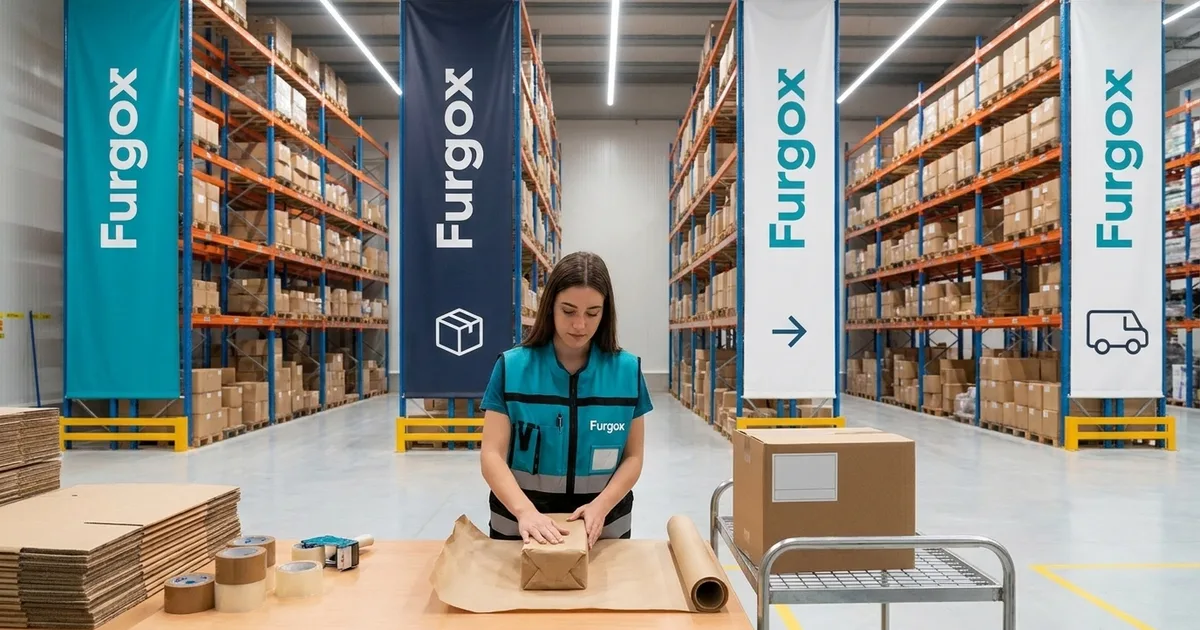
Imagine you sell cosmetics on Shopify. Today you receive the order, go to the shelf, pick the products, wrap them, print the label and wait for the courier to come round. With a 3PL, the order lands automatically in their system, someone from their team prepares it in their warehouse, it goes out with the label of the most suitable carrier, and the tracking number reaches your store. You never touch the box.
Where 1PL, 2PL, 3PL come from
The acronyms indicate who handles the logistics. A 1PL is the business itself shipping with its own resources. A 2PL is a provider giving you one specific service, such as transport (the courier company that collects your parcels). A 3PL takes care of several pieces at once: warehousing, preparation, shipping and returns. Above that sit models for coordinating and integrating the whole supply chain (4PL and 5PL), aimed mainly at large businesses juggling many logistics suppliers.
What a 3PL does for an online store: typical services
Almost every ecommerce 3PL covers the same journey. What varies between providers is how they do it: turnaround times, error control, software and flexibility. Here's the full cycle.
1. Goods-in
Your supplier sends stock to the 3PL's warehouse. There it's unloaded, units are counted, checked against what you declared, and logged into the system. This step is often underestimated: if goods-in is done badly, every step afterwards inherits the error.
A very common mistake we see: the brand doesn't give advance notice of an incoming delivery, or sends a delivery note that doesn't match what actually arrives (wrong size, wrong colour, mixed-up boxes). A good 3PL asks for advance notice with SKUs and quantities, and flags any discrepancies before putting the stock up for sale.
2. Storage
Your products are placed on shelving or pallets, depending on volume and turnover. Best-sellers go near the picking area; slow movers go higher up or further away. If you sell products with expiry dates or batch numbers (food, cosmetics, supplements), the 3PL needs to control this so that whatever expires soonest ships first.
3. Order preparation (picking and packing)
Picking means fetching the products for each order; packing means putting them in the right box, protecting them and sealing it. This is where the difference between a warehouse with a proper method and one that improvises really shows: barcode scanning, checks before sealing the box, well-chosen packaging sizes. If you want to dig deeper, we have a guide on how to avoid order-preparation errors.
This stage also covers the extras: your branded box, a handwritten note, a free sample, tissue paper. A proper 3PL stores your materials and applies them order by order.
4. Shipping
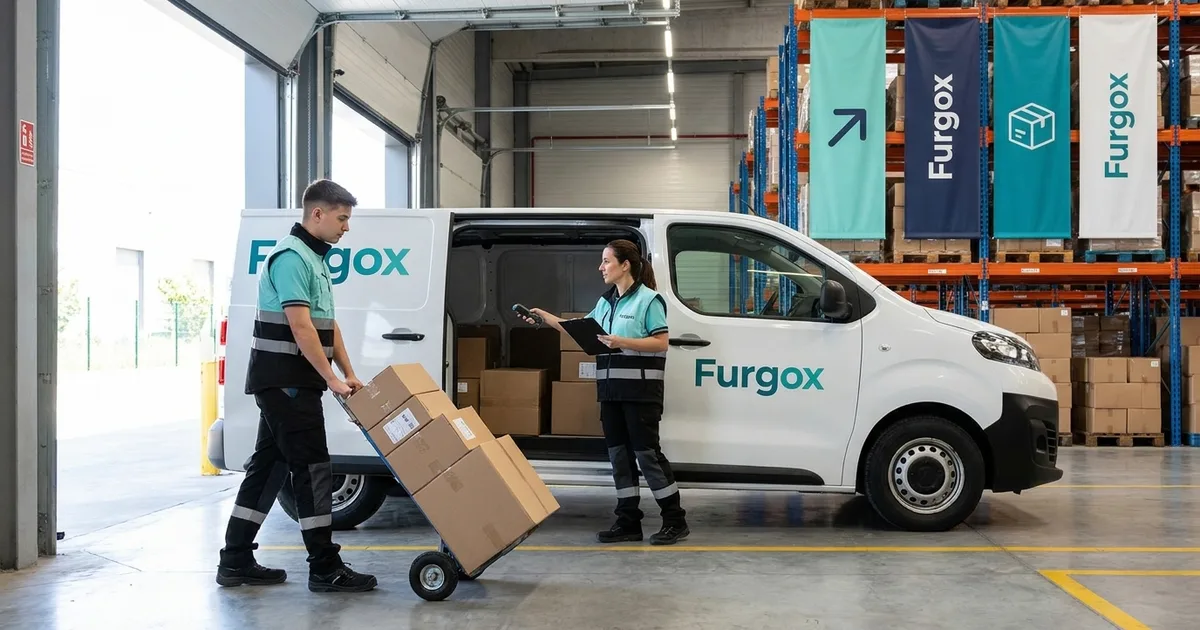
The 3PL has agreements with several carriers and chooses which one each parcel goes out with, based on destination, weight and delivery time. It generates the label, the carrier collects from the warehouse, and the tracking number flows back into your store so the customer receives it.
5. Returns
When a customer sends something back, the parcel returns to the warehouse. It's opened there, checked to see whether the product can be resold and, if so, put back into available stock. If not, it's set aside and you're notified. The speed of this step matters more than it seems: a returned product that takes two weeks to get back on the shelf is stock you can't sell. We go into more detail in the guide on outsourced ecommerce returns.
6. Software and integrations
All of the above works because the 3PL connects to your store and your marketplaces. Orders come in automatically, stock updates in real time, and you get a dashboard showing what's in stock, what's gone out and what's pending. Without that connection, a 3PL is just a shed with shelving.
To give a concrete example: at Furgox, orders from Shopify, WooCommerce, PrestaShop, Squarespace, Amazon (seller-fulfilled orders, not FBA) or marketplaces such as El Corte Inglés, PcComponentes or Worten come in automatically, and clients see their stock, orders, goods-in, returns, batches and invoices on their dashboard, with no extra cost and no limit on users. You can see how it works on the integrations with stores, marketplaces and carriers page.
The 3 pillars of logistics and where a 3PL fits in
Logistics is usually summed up in three pillars: procurement (getting hold of the stock), storage (keeping and controlling it) and distribution (getting it to the customer). In an online store, you still handle procurement: you decide what to buy, from whom and when. The 3PL takes care of the other two pillars.
This matters for understanding where responsibilities sit. A 3PL doesn't decide how much stock to hold or when to reorder; it gives you the data so you can decide that well yourself.
How a 3PL charges and what drives the cost
Most ecommerce logistics providers charge based on usage rather than a flat fee. Typically your monthly invoice includes these items:
- Storage: the space your stock takes up, measured per pallet, per location or per cubic metre.
- Goods-in: unloading and logging incoming stock, sometimes charged per pallet, per box or per hour.
- Order preparation: a fee per order, and in many cases an extra charge per additional unit.
- Packaging materials: boxes, filler and tape, if you don't supply your own.
- Shipping: the carrier cost based on weight, size and destination.
- Returns: receiving and inspecting each returned parcel.
- Extra services: kits, labelling, leaflet insertion, special stocktakes.
Some 3PLs add a set-up fee, a monthly minimum or a minimum contract term. Ask about this before signing, as it can significantly change the real cost in the first few months.
What pushes the price up or down
Price isn't set purely by order volume. It's also affected by:
- Monthly volume and how stable it stays across the year.
- The average number of units per order.
- Product size and weight (moving jewellery doesn't cost the same as moving furniture).
- How many different SKUs you have and how fast each one turns over.
- Destinations: mainland, islands, Europe.
- How customised your packaging is.
- Your returns rate.
So be wary of generic rates advertised as "from €X": with your actual catalogue, the real figure can look very different. To run the numbers for your own case, see the guide on ecommerce logistics costs and how to calculate them.
A rough example to compare against what you do today
A store shipping 400 orders a month, spending around 5 minutes per order on picking, packing, labelling and admin, spends roughly 33 hours a month just on preparation. Add in receiving stock, counting inventory, dealing with issues and managing returns, and it's easy to go over 50 hours. These are only rough figures, but they're useful for one thing: when you compare a 3PL's invoice, compare it against the cost of those hours, the rent on your space, materials and the shipping rate you manage to negotiate on your own, not just the courier's price.