Outsourced ecommerce returns mean a logistics operator receives, checks and puts back into stock whatever your customers send back, connected to your store so inventory and refunds update themselves. It pays off when returns are eating up your hours, locking up sellable stock or generating a stream of "have you received my parcel?" tickets.
A return doesn't start when the box comes back. It starts when the customer requests it and expects a clear answer, a convenient drop-off point and a refund without having to chase anyone. Here's how the outsourced process works step by step, what the cost depends on, what to demand from the operator, and when it's worth making the switch.
What outsourced ecommerce returns are
This is the service where a 3PL manages your store's reverse logistics: the buyer drops the parcel at a point, it reaches the operator's warehouse, it's matched against the order, checked for resale, and if it passes, goes back into stock. You decide the rules and the refund; the operator executes and keeps everything logged.
The difference versus doing it yourself isn't in opening boxes — it's in speed and data. A returned product that takes ten days to be checked is stock you can't sell, and a customer who doesn't get their money back is a customer who won't order again.
Why handling returns in-house stops being efficient
With a handful of orders it seems manageable: someone collects the parcels, opens them when they get a spare moment and jots it down on a spreadsheet. The problem is that returns are never a priority next to outgoing orders, so they pile up in a corner. It's extremely common to see stores with two or three unopened boxes of returns while the website marks those sizes as out of stock.
The hidden cost shows up in four places:
- Tied-up inventory: units you physically have but can't sell or plan around because nobody has checked them.
- Customer service: every day without confirming receipt generates queries and, sometimes, disputes with the payment gateway.
- Margin: restocking a faulty unit as new triggers a second return and a bad review.
- Team capacity: after sales, Black Friday or Christmas, returns all arrive at once, exactly when you have the least time.
Outsourcing doesn't make a return free. It makes it measurable: you know what each step costs and how long it takes, instead of paying for it in odd hours nobody counts.
How outsourced ecommerce returns work, step by step
A good outsourced process works as an extension of your warehouse and your brand, not as a mailbox where parcels pile up. The key is that the customer's request, the physical receipt, the decision on the product and the stock update are all connected.
1. The customer requests the return with clear rules
Before the product travels, you need to know what you're accepting: deadline, required condition, categories that aren't admitted (hygiene products, personalised items, opened seals) and who pays for shipping. A wrong size isn't the same as a faulty product or an incomplete order, and each case can be handled differently.
With the rules settled, the customer knows what to include and when they'll get a response. If the policy is vague, the warehouse ends up making commercial decisions that aren't theirs to make.
2. The parcel arrives at a drop-off point
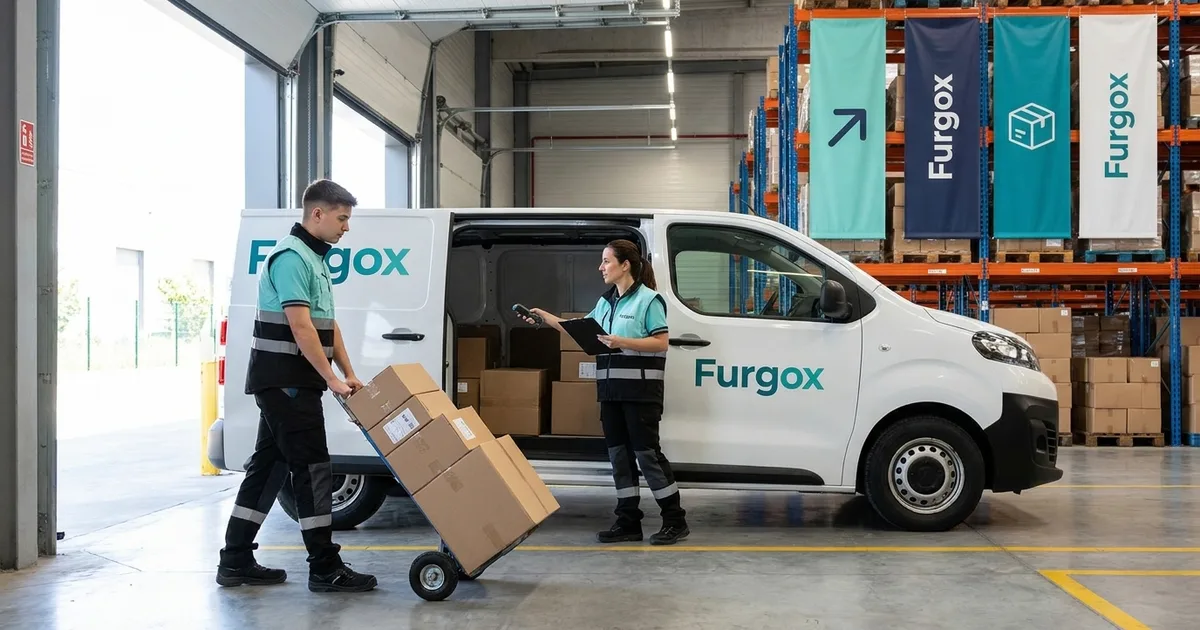
The easier it is to drop off the parcel, the fewer tickets and the fewer returns that get lost along the way. Locker networks and convenience points let the buyer drop it off whenever suits them, without waiting for a courier. At Furgox, buyer returns are made at InPost points and go straight to our warehouse in Murcia.
3. The warehouse receives and identifies each unit
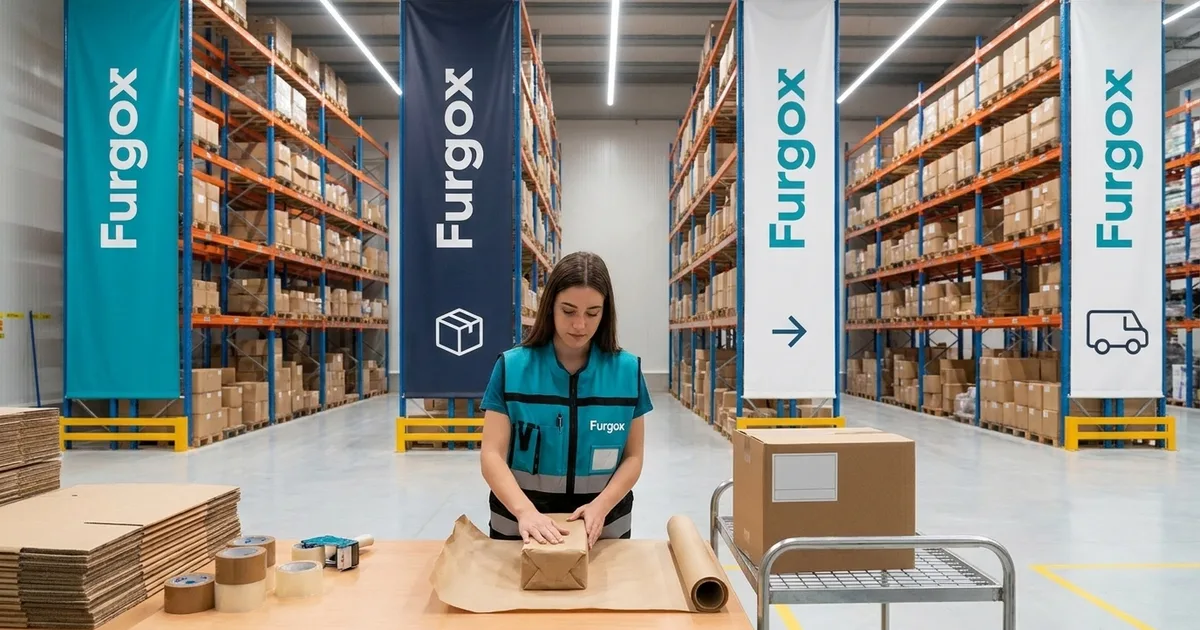
On arrival, each return is matched to the correct order and SKU by scanning the barcode, and the reason is logged. This step looks trivial, but it's where discrepancies start: a size M returned inside a size L bag, a customer who sends back a different product, or a parcel with no reference to the order at all.
That's why the operator should have a protocol for "orphan" returns (no order number): search by sender's name, postcode or SKU, and flag it to you if no match is found.
4. The product is checked and its fate decided
Classification shouldn't stop at "accepted" or "rejected". A useful flow separates:
- Fit for immediate resale.
- Needs reconditioning (re-ironing, new bag, re-labelling).
- Return to supplier due to a factory defect.
- Not sellable (broken, used, seal opened on cosmetics or food).
Each sector has its own rules. In fashion, a garment with intact tags and no odour goes back into stock after inspection. In electronics, you need to check accessories, cables and that the box seal looks as it did when it left. In cosmetics, an opened jar can't be resold even if it looks untouched. Ask for photos when the product is expensive or the decision could end in a dispute with the customer.
5. Stock and refund update without delays
A return is only closed once the system reflects what happened. If the unit is fit for sale, your store's stock goes up automatically; if not, it stays off sale so nobody buys something that doesn't exist. With that information, you (or your store, if automated) issue the refund.
Integrations with Shopify, WooCommerce, PrestaShop and Amazon avoid exporting files and fixing things by hand. In our case, returns are received, marked as fit or unfit for sale, and back in stock within 48 hours of arrival, with everything visible in the client panel.
The returns policy: what needs to be settled before outsourcing
No operator can fix a confusing policy. Before moving returns out, put in writing:
- Deadline: in Spain, online buyers have at least 14 calendar days to withdraw; you can extend this as a selling point.
- Who pays for the return shipping: free, a fixed cost deducted from the refund, or free only on exchanges.
- Exchange or refund: offering a size exchange first recovers part of the sale.
- Required condition: tags, original packaging, seals.
- Exclusions: personalised products, intimate hygiene items, perishables.
- When the refund is issued: on validating receipt at the warehouse, not when the customer requests it. That's how you avoid refunding money for empty boxes.
Make the policy visible on the product page, at checkout and in the confirmation email. The less the customer has to search for, the fewer tickets land on support.
How much it costs to outsource returns
There's no single price, and be wary of anyone who gives you a fixed figure without knowing your product. Cost depends on:
- Volume and return rate: a 3% rate in accessories is not the same as 25% in fashion.
- Type of inspection: a quick glance at a phone case versus a functional test on an appliance.
- Reconditioning: re-ironing, repackaging in a new bag, re-labelling.
- Return shipping: depends on weight, size and the drop-off point.
- Destination for non-sellable items: return to supplier, outlet or disposal.
An indicative example to help you do the maths at home: a store with 800 orders a month and a 10% return rate gets around 80 returns. If each takes between 10 and 15 minutes (opening, locating the order, checking, updating stock, replying to the customer, refunding), that's between 13 and 20 hours a month, not counting the days the stock sits idle or the errors made. Compare that time and the stock tied up against what the operator is asking, not just the per-return fee.
When requesting a quote, ask what each line item includes: a low price per receipt might leave out inspection, photos or repackaging. To see how this cost fits into your overall operation, check the guide on ecommerce logistics costs and how to cut them.
What to ask a returns operator
Not all 3PLs handle returns the same way. Some just receive and store; others inspect, classify and restock according to your rules. The difference shows up in refund speed and inventory accuracy.
- Committed turnaround from parcel arrival to classification. A return that comes in on Monday shouldn't still be unchecked on Friday.
- Real-time visibility: returns received, pending review, reason and final destination, without having to ask by email.
- SKU-level traceability and, if you work with them, batch and expiry tracking.
- Photos for high-value items or when a unit is rejected.
- Automatic syncing of stock with your store and marketplaces.
- Exception protocol: parcels with no reference, products that aren't yours, empty boxes.
- Itemised pricing by activity, with no surprises on the first invoice.
Ideally, returns should be part of the same workflow that prepares and ships your orders, not a separate process. If you're comparing options, this guide on choosing a 3PL logistics operator will help, and here you can see how receiving, storage, picking, shipping and returns fit together in our fulfilment services.
How to use returns data to reduce returns
Outsourcing gives you something you almost never have in-house: the reason for every return, logged consistently. With that, you can tackle the causes:
- Sizing: if a model keeps getting "runs small", add a "runs small" note or a real size chart to the product page.
- Photos and descriptions: "not as pictured" usually points to poorly reproduced colour or a missing in-use photo showing scale.
- Transit damage: if breakages keep happening with one carrier or one region, it's a packaging or route issue, not a product one.
- Picking errors: "I received a different product" is a picking fault and gets fixed in the warehouse.
- Try-before-you-buy purchases: customers who order three sizes and keep one. You can limit it or accept it, but it's worth knowing how many there are.
Returns metrics that matter
The return rate on its own doesn't explain anything. Also measure:
- Time from arrival at the warehouse to classification.
- Percentage of units that go back into stock.
- Value of non-sellable stock per month.
- Time to refund.
- Reasons by SKU, category, channel and carrier.
With this, you'll know whether the problem lies in the product page, the shipping, or your own refund process. Also, knowing how many units typically come back after a campaign helps you avoid overbuying: it's part of good ecommerce inventory control.
International returns
If you sell across Europe, returns are slower and more expensive: more transit days, more points where a parcel can get lost and, sometimes, a return cost that eats up the entire margin on a cheap product. Some reasonable options: charge for return shipping on international orders, offer a refund without return for low-value products (it works out cheaper than shipping), or batch returns by country. Whichever option you choose, the operator should log the country of origin so you can see where they concentrate.
When it makes sense to outsource returns
There's no magic volume. It usually pays off when one or more of these signs appear:
- You have unopened returns sitting for more than two or three days.
- Your website's stock doesn't match what's on the shelf.
- Support can't reliably confirm whether a parcel has arrived.
- After every campaign, someone has to stop their work to open boxes.
- You don't have the space to separate sellable, pending and non-sellable stock.
It's usually sensible to outsource returns together with the rest of your logistics, because returns use the same stock and the same system as shipping. If you're unsure whether the time has come, here's when to outsource your ecommerce logistics and when not to.
Checklist before outsourcing your returns
- Written returns policy, with deadline, exclusions and who pays for shipping.
- Pass/fail criteria by category, with examples.
- Decision on what to do with non-sellable stock: supplier, outlet or disposal.
- Refund timing: on validating receipt.
- All products with a unique barcode per variant.
- Store and marketplaces connected so stock updates itself.
- Classification deadline agreed in writing with the operator.
- Access to a dashboard showing returns, reasons and final destination.
- Itemised pricing by activity.
- Monthly review of reasons to fix product pages, packaging or shipping.
Frequently asked questions
What are the benefits of outsourcing my online store's returns?
You get sellable stock back sooner, refund faster and free up your team from a task that always gets left until last. You also gain reliable data on return reasons by product, which helps you reduce them. The cost stops being scattered across odd hours and becomes a line item you can measure.
How long does it take an operator to process a return?
It depends on the operator and the product, but a reasonable expectation is that it's checked and back in stock within one or two days of reaching the warehouse. Ask for this in writing before signing. Products needing functional testing or reconditioning may take a little longer.
When should I refund the customer?
The safest approach is to refund once the warehouse confirms the product has arrived and is in the agreed condition. Regulations allow you to withhold the refund until you receive the goods or proof they've been sent. State this in your policy so the customer knows what to expect.
What happens to returned products that can't be resold?
They're marked as unfit for sale and taken off the sellable stock so nobody buys them. You then decide their fate: return to supplier if it's a factory defect, sale as outlet stock, or disposal. The important thing is that it's logged so finance knows how much value is lost each month.
Can I outsource only returns and keep shipping orders myself?
It's possible, but it tends to complicate things: you'll have stock in two places and will need to move it back and forth. It works better when the same operator prepares orders and receives returns, because the stock and the system are unified and returned items go back on sale without any transfers.
If you want to know how much it would cost to outsource your returns together with the rest of your logistics, tell us your volume and product type on our pricing page and we'll put together a tailored quote. And if you'd rather see the dashboard and the process live, you can book a demo.