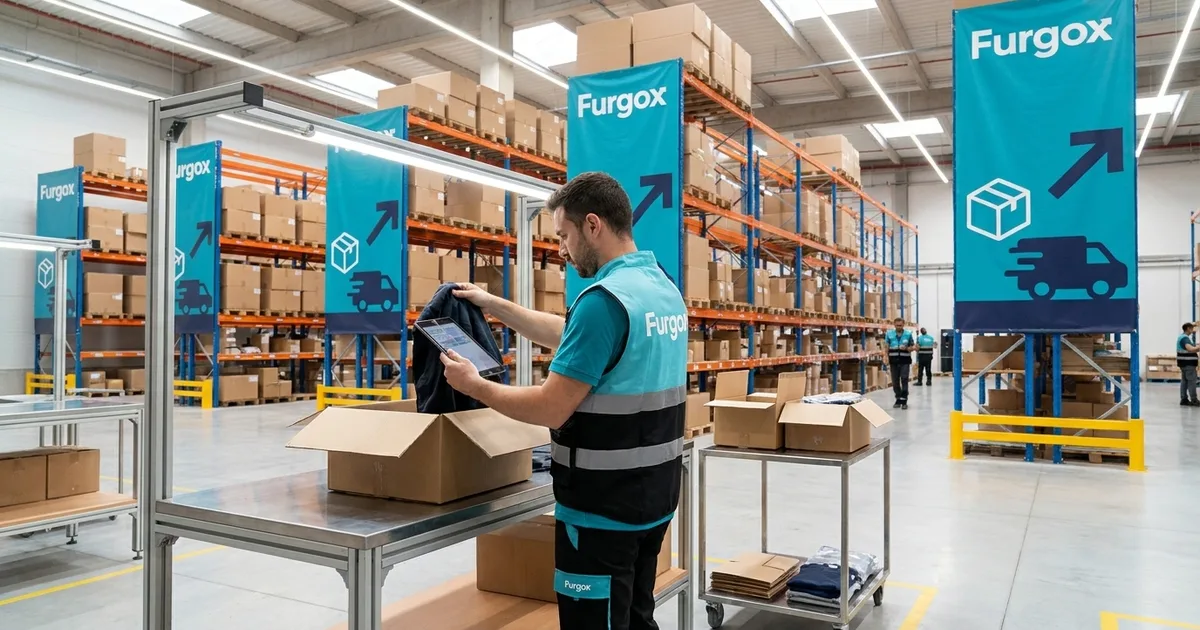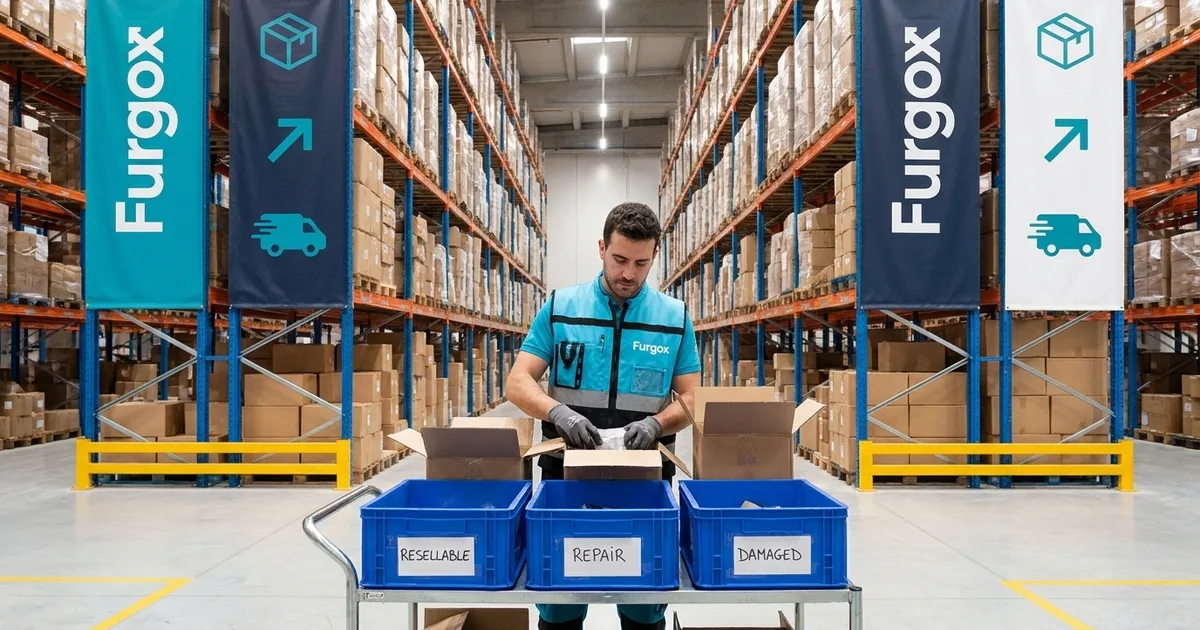
Reverse logistics covers everything that happens when a product makes the journey backwards: from the buyer (or the courier) back to your warehouse. It's not just returns. It also includes size exchanges, warranty repairs, refurbishment, parcels that couldn't be delivered, and packaging recycling.
In an online shop, reverse logistics decides two things that show up at the end of the month: how much margin you lose on each return, and how long that product takes to go back on sale. If you organise it with a clear flow (request, handover, inspection and restocking or write-off), most of what comes back can be sold again within a few days.
What reverse logistics is
Reverse logistics is the set of processes that manage the flow of products, materials and packaging from the end customer back to the seller or manufacturer. Its aim is to recover the value of whatever comes back: resell it, repair it, refurbish it, or, if it's beyond saving, dispose of or recycle it in a controlled way and at the lowest possible cost.
Put another way: forward logistics gets the product to the buyer's door, and reverse logistics handles everything that comes back. In manufacturing, this is often discussed in terms of returnable containers, pallets and waste. In ecommerce, the bulk of it is customer returns and parcels the courier couldn't deliver.
Types of reverse logistics: which flows it covers in an online shop
If you look up types of reverse logistics, you'll find very industry-heavy classifications. For a physical product shop, these are the flows you'll actually see in the warehouse:
Customer returns
The most common case: the customer changes their mind within the cooling-off period, the product wasn't what they expected, or it arrived faulty. This is the highest-volume flow and the one it pays off most to automate.
Size, colour or model exchanges
Technically this is a return plus a new order. The typical mistake is treating it as two separate processes: the customer waits for the returned item to arrive before receiving the new one, or the new one is sent out without checking that the old one actually comes back.
Repairs and warranties
Products returned for repair or replacement under warranty. Here the inspection is more technical and sometimes the product travels to the manufacturer. It's worth keeping a record of which unit went out, which one came back, and which one was sent as a replacement.
Refurbishment and second life
Items that can't be sold as new but can be sold as outlet stock, refurbished, or as spare parts. Managed well, this turns a loss into a smaller gain; managed badly, it piles up in a corner of the warehouse taking up space.
Undelivered parcels
Incomplete addresses, recipients who don't collect from the pickup point, refusals at the door. The parcel comes back without anyone having asked for it, and if it's not flagged, that stock is left in limbo. If this happens to you often, take a look at why ecommerce deliveries fail and how to avoid it.
Packaging and recycling
Boxes that can be reused, pallets, padding, returnable containers. In a small shop this can seem minor, but reusing boxes from returns that are still in good condition, and sorting waste properly, saves on materials and meets what buyers increasingly expect.