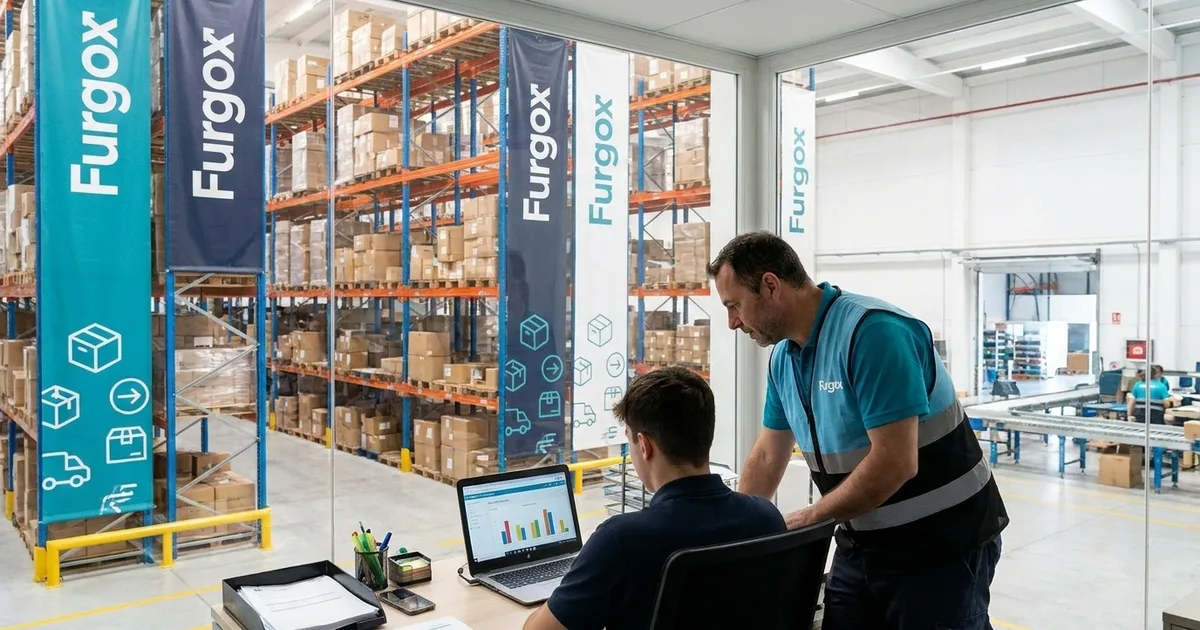
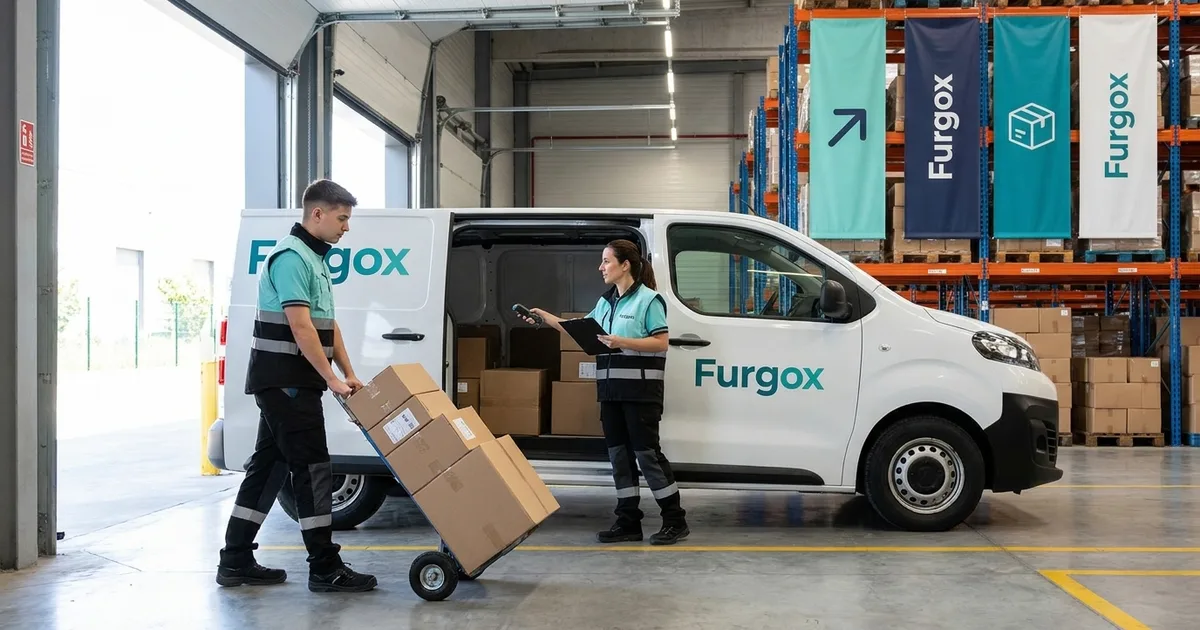
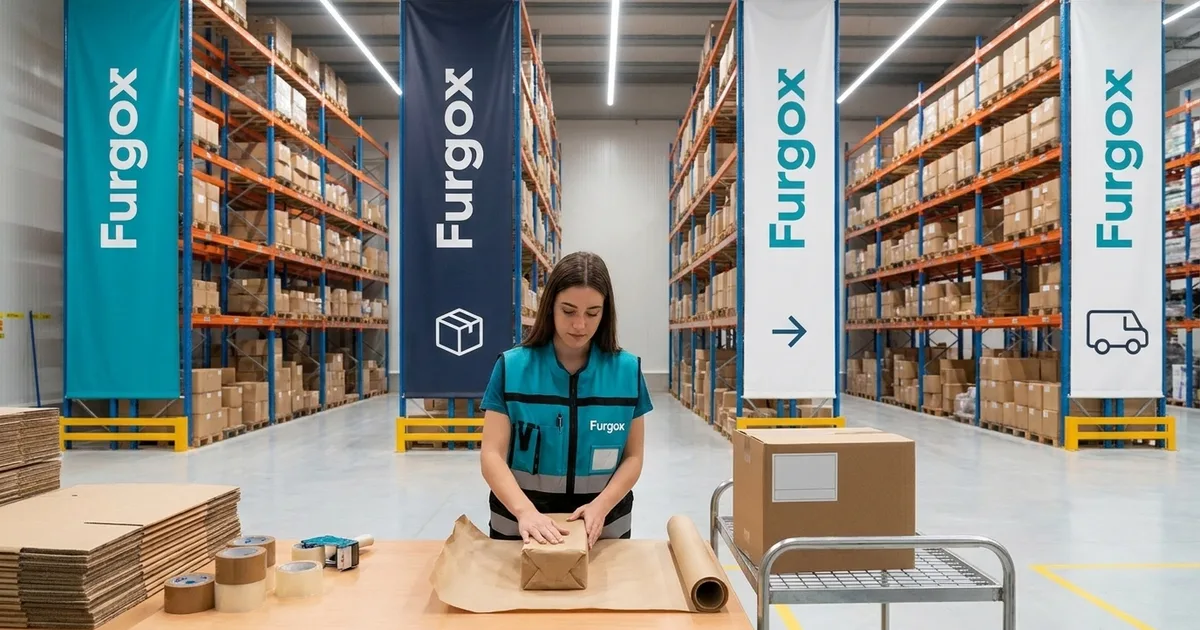
If you're looking for Shopify fulfilment in Spain, what you need is a logistics operator with a warehouse in Spain that connects to your store, picks up orders automatically, prepares them and ships them with your stock in sync. Shopify doesn't offer that service here: its own fulfilment network only works for orders shipped from the United States.
That's why the real decision isn't "which Shopify app do I activate", but which 3PL to choose and how well it integrates. A badly prepared order, a stock-out or a late delivery costs more than the margin on that sale: it affects reviews, repeat purchases and trust in your brand. Below you'll find how the connection works, what to check, when it's worth it and how to migrate without pausing sales.
What Shopify fulfilment means in Spain
Shopify fulfilment is the service in which an external operator stores your product, automatically receives orders from your store, prepares them, hands them to the courier and sends the tracking number back to Shopify. In Spain this is provided by 3PL operators with their own warehouse, connected to your store via an app or API, not by Shopify directly.
Shopify Fulfillment Network isn't available in Spain
This is the first misunderstanding we come across. Shopify Fulfillment Network is an app built for businesses shipping orders from the United States, and Shopify itself sold that part of the business to Flexport back in 2023. For a store selling in Spain, the route is to connect an external operator through whatever integration it offers (app, fulfilment service configured in Shopify, or API).
The upside is you're not tied to a single provider: you can choose the 3PL that best fits your product, your destinations and your volume, and switch if it doesn't deliver.
What Shopify handles and what the operator handles
- Shopify: catalogue, pricing, promotions, checkout, customer data and shipping notifications.
- The operator: receiving goods, locating each SKU, picking, packing, labelling, courier selection, returns and physical stock control.
- The integration: making sure orders, stock and tracking flow between both sides without anyone exporting a CSV.
When these layers work disconnected, the usual problems show up: stock that doesn't match reality, duplicate orders, delays during campaigns and hours spent answering "where's my order?".
How Shopify connects with an external warehouse
The most reliable way to assess a provider is to follow an order from start to finish. If a step is opaque or manual, that friction will only grow as volume increases.
1. Receiving and validating inventory
Everything starts before you sell anything. The operator receives the goods, counts units, checks references against your delivery note and logs any discrepancies. This stops Shopify showing a product as available when it hasn't actually arrived, arrived damaged, or arrived in a different quantity.
A common mistake: sending goods without prior notice of arrival. The warehouse receives pallets without knowing what's inside, and putting them away gets delayed by days. Always flag each incoming shipment with SKU and units. If you sell cosmetics, food or supplements, insist on batch and expiry control from day one.
2. Order and stock synchronisation
With a direct integration, every paid order on Shopify enters the picking queue within minutes, and available stock is returned to the store as it's reserved and dispatched. Check these points when setting it up:
- That the Shopify SKU matches the warehouse SKU exactly, variants included. A size with no SKU is an order stuck in limbo.
- How packs and bundles are handled: sold as a single SKU, or as a sum of components that deduct stock separately.
- What happens with orders that are only partially in stock: held, shipped partially, or flagged.
- How an address change or cancellation is handled once the order has already entered the warehouse.
- Whether the order is marked as fulfilled on Shopify along with tracking, so the customer automatically gets the shipping email.
If you also sell on marketplaces, stock needs to be unified across all channels. If your store runs on another platform or you're about to add more channels, our integrations page for Shopify, WooCommerce, PrestaShop, Amazon and couriers explains how we approach it.
3. Picking, packing and checks before sealing the box
Picking is gathering the products; packing is boxing them up. It sounds simple until you've got hundreds of orders, lots of variants and different rules per campaign. What actually makes the difference in a real warehouse:
- Wave picking to group orders and shorten walking routes.
- Scan-based validation of every unit before sealing the box, not by eye.
- Box sizing that matches the order, so you're not paying for shipped air.
Typical errors (wrong size, similar colour, a missing unit in a pack) almost always come from picking without scanning. We cover this in depth in our method for error-free order picking.
Branded packaging can carry on exactly as before when you outsource: boxes, inserts, samples or cards are stored at the warehouse and added according to your rules. A practical tip: set a standard for your usual order and save the special unboxing for launches, gifts or repeat customers. Every extra element adds seconds of handling and material cost per order.
4. Courier selection and tracking
The courier shouldn't be chosen out of habit. The best option for a 500-gram parcel to Madrid might not be the right one for a bulky box going to an island or a shipment to Germany. Automatic selection by destination, weight and dimensions balances cost, speed and delivery quality, and avoids manually swapping labels. For more detail, see when multi-courier shipping for ecommerce pays off.
In Spain, delivering within 24-48 hours is now the standard shoppers expect. For Europe, the sensible move is to start from a stable operation here and only open a warehouse in another country once demand in that market justifies it.
5. Returns
In fashion and footwear, returns are part of the model. What matters is how long it takes a returned unit to be back on sale on Shopify. Ask who inspects the product, what criteria decide if it's fit for resale, and how quickly it's returned to stock. A return sitting in a box for a week is stock you're not selling.
Shopify fulfilment in Spain: when to outsource
Don't wait until your warehouse turns into chaos. That's usually the most expensive moment to outsource, because you end up migrating with disorganised stock, undocumented processes and a backlog of orders. Clear signs it's time:
- You or your team spend several hours a day packing instead of selling or buying stock.
- Space is limiting how much inventory you can buy.
- Errors increase with every campaign.
- During Black Friday or after an influencer push, orders go out days late.
- You want to sell on marketplaces or across Europe and your current setup can't keep up.
Order volume isn't everything. A store with 300 orders a month of a small product with no variants can manage in-house for a while longer. Another with the same 300 orders but 80 SKUs, kits and sharp peaks probably needs a 3PL sooner. We go into this in when to outsource ecommerce logistics and when not to.
Example with indicative figures
Picture a Shopify accessories store with 600 orders a month. Between finding the product, packing, printing the label, updating the order and handling issues, around 5 minutes per order is a reasonable estimate. That's about 50 hours a month, more than a full working week, without counting goods-in, returns or time lost on calls with couriers.
Add a rented unit or storage space, packaging materials bought in small quantities, and shipping rates negotiated on low volume. When comparing against a 3PL, weigh up all of that, not just the cost per order. These figures are indicative; run the numbers with your own actual times over two real weeks.
What to ask a 3PL before signing
Sales pitches aren't enough. A serious operator will know how to explain how it measures its own performance and what happens when something goes wrong. Ask for:
- Average time from order received to order shipped, and the daily cut-off time.
- Inventory accuracy per SKU and how often it's updated on Shopify.
- Picking error rate and how each order is validated.
- Turnaround time for returns to go back into stock.
- Which couriers they work with and how they decide which one to use for each shipment.
- What you can see in real time: stock, held orders, incoming goods, returns and invoices.
- Full cost structure and exit terms.
For a broader comparison, check our guide on how to choose a 3PL logistics operator.
What fulfilment costs depend on
Every operator charges differently, but it almost always comes down to three things: storage (based on how much space your stock takes up), order preparation (based on units and complexity) and shipping (based on weight, volume and destination). Packaging materials, custom inserts, returns and seasonality also play a part.
Watch out for what's missing from the first quote: onboarding fees, monthly minimums, integration charges, campaign surcharges or lock-in periods. A rate that looks low can end up expensive if your volume fluctuates. Always ask for a simulation using your real orders from a normal month and a peak month.
How to migrate your Shopify store to a 3PL without pausing sales
- Clean up your catalogue: one unique SKU per variant, no duplicates or orphan references.
- Document the rules: packs, campaign gifts, inserts, international orders and what to do when stock runs out.
- Connect the store in test mode and run test orders before moving any stock.
- Send the goods with advance notice and start with your best-selling references.
- Plan an orderly cutover: a single day when you stop preparing orders in-house and the operator takes over, with Shopify stock fully reconciled.
- Review the first two weeks daily: dispatch times, errors and delivery issues.
- Avoid migrating right before a peak. Leave at least a few weeks' buffer before Black Friday or a launch.
How we do it at Furgox
At Furgox we connect your Shopify store to our own 6,800 m² warehouse in Murcia: orders come in automatically, stock stays in sync and orders go out in under 24 hours, with delivery in Spain in 24-48 hours and across Europe in 3-5 days. For each shipment we pick the courier based on destination and weight (Paack, GLS, CTT Express, NACEX, Correos, DHL, UPS, Zeleris or MOVIQ for pallets), and returns are back in stock within 48 hours of arrival.
We come from running last-mile delivery for CTT Express and Paack, so we know exactly where deliveries tend to break down. You get your own dashboard with stock, orders, goods-in, batches, returns and invoices, with no onboarding fee and no lock-in. If you want to see how your rate is calculated based on your volume and product, our pricing page explains how we charge for fulfilment.
Frequently asked questions
Does Shopify have its own fulfilment service in Spain?
No. Shopify Fulfillment Network is designed for businesses shipping orders from the United States. In Spain, the option is to connect your store to an external logistics operator via app or API, which stores your stock, prepares orders and sends tracking back to Shopify.
How does Shopify connect with a logistics operator?
The operator integrates with your store so that every paid order automatically enters their system, and stock is updated on Shopify. Once dispatched, the tracking number is returned to the order and the customer receives the shipping notification. The key is that SKUs match exactly on both sides.
How much does fulfilment cost for a Shopify store?
It depends on how much space your stock takes up, units per order, the weight and size of shipments, destinations and the packaging you use. That's why every operator quotes based on your specific case. Ask for a simulation using your real orders and check for onboarding fees, minimums or lock-in periods.
Can I keep my branded packaging if I outsource?
Yes. A good 3PL stores your boxes, inserts, samples or cards and adds them according to the rules you set. It's worth defining a standard for your usual order and saving special unboxing for specific campaigns, since every extra adds handling time.
How many orders a month does it take for outsourcing to make sense?
There's no single figure. Complexity matters more than volume: number of SKUs, variants, packs, demand peaks and how much time order picking is taking from you. Many stores start considering it from around 100 orders a month, once packing is already eating up hours every day.
If your Shopify store is growing and preparing orders is starting to eat into the time you need to sell, tell us about your case: you can request a rate tailored to your volume on our pricing page or see the dashboard and operation in a demo with our team.